
QESS Projects

Enhancing Students’ Emotional Wellness and Resilience in Post-Secondary Institutions (02/QESS/2025)
Overview
The project aims to address the growing mental health challenges faced by students in self-financing post-secondary institutions in Hong Kong. By integrating an online learning program with in-person empowerment and capacity-building to foster emotional resilience and mental wellness, the key components in this project include an online Emotional Wellness and Resilience Platform featuring an AI-powered assistant, animated learning modules based on the CASEL framework, and emotional wellness resources. Moreover, the project will conduct a series of interactive workshops to build emotional skills like stress management and resilience. Trained Student Ambassadors will lead peer-driven campaigns to promote awareness of mental health. The program will culminate in a final dissemination event to share outcomes and ensure sustainability. By leveraging advanced technology and evidence-based practices, the program aims to empower students, foster collaboration, and establish a sustainable model for addressing mental health in higher education.

Project Objectives
- Establish an online platform to enhance existing resources for developing self-financing post-secondary institution students’ mental wellness and resilience
- Develop an online chatbot for mental health resources that is powered by AI technology
- Conduct in-person mental wellness and resilience workshops for students and teachers
- Deliver a Student Mental Wellness and Resilience Ambassador Scheme to train up student ambassadors in promoting mental health awareness.
- Conduct need and emotional competence assessment to evaluate students’ mental health’s needs, awareness, and emotional skills in private higher-education sectors
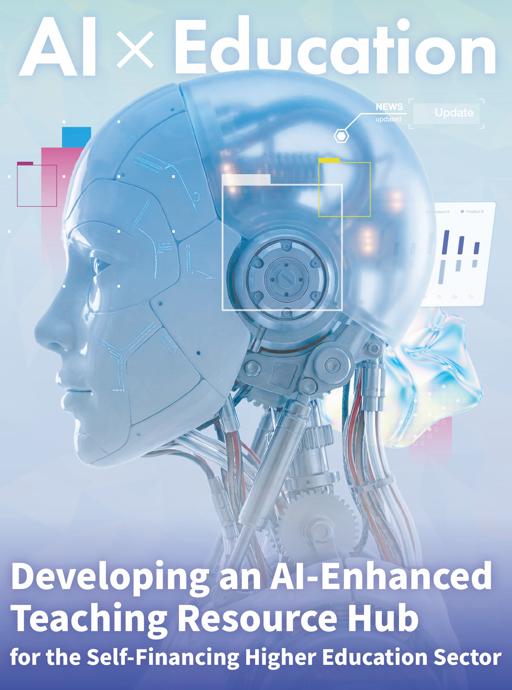
Developing an AI-Enhanced Teaching Resource Hub for the Self-Financing Higher Education Sector (T01/QESS/2025)
Overview
This project aims to address the lack of systematic support and training for teachers in self-financing institutions to effectively integrate generative artificial intelligence (AI) into their teaching. To achieve this, the project will develop the AI-Enhanced Teaching Resource Hub, an online open educational resource platform developed based on the expanded DPaCK (Digitality-related Pedagogical and Content Knowledge) model. The Hub will provide teachers in the self-financing educational sector with tailored AI-powered tools, training resources, and exemplary practices to enhance their AI literacy and pedagogical skills. It includes the AI Educators Academy, the Educational AI Toolkit, and the AI-Powered Pedagogy Repository, which collectively aim to equip teachers with practical AI-driven solutions and innovative teaching practices. Additionally, 20 professional development workshops and 5 thematic Coffee Talk Meetings will be launched to foster collaboration, while research will be conducted to evaluate the platform’s effectiveness. Findings will be shared through 2 public seminars, social media, and the Hub itself to drive broader impact. By empowering educators with AI, the overall objective of this project is to enhance teaching and learning experiences in the four participating institutions and the self-financing post-secondary sector.
Project Objectives
- Identify, centralize, and utilize AI learning resources and tools for supporting the teaching and development of AI literacy among teachers in the post-secondary sector, as aligned to the expanded-DPaCK framework
- Design and provide effective AI tools to facilitate the teaching in self-financing institutions
- Organise professional development activities to enhance teachers’ AI literacy in the post-secondary sector
- Conduct research to evaluate the initiatives adopted for AI literacy development
Empowering Language Competence and Professional Communication through an AI-based Language Laboratory (ALL)(T02/QESS/2024)
Overview
This project will establish an AI-based Language Laboratory (ALL) at Hong Kong Shue Yan University to boost students’ English and Chinese writing skills. The ALL includes an online AI platform for personalized writing support and a physical lab for workshops and training. There has been an urgent need to raise language proficiency among students, particularly those attending self-financing tertiary institutions in Hong Kong, where lower language proficiency is prevalent. This project seeks to bridge these gaps by delivering genre-specific AI resources and providing targeted training on AI tools, empowering both students and teachers. The ultimate aspiration is to foster language mastery and genre adaptability, thereby advancing students' academic success and enhancing their future employability.

Project Objectives
- Identify, centralize, and utilize AI learning resources and learning tools to enhance students' writing proficiencies in both Chinese and English.
- Design and utilize AI Chatbots to facilitate and improve students’ writing skills of various genres in courses including but not limited to First Year Chinese I/II, English Usage I/II, and English Writing I/II.
- Organize training workshops for students and teachers to enhance students' proficiency in using AI instruments properly to enhance writing skills.
- Conduct interdisciplinary evaluations and research in AI-powered language education.
- Disseminate the experiences and knowledge gained from the establishment of the ALL to teachers, students, and the general public to further facilitate students' writing capabilities and teachers’ teaching methods.
Developing a One-stop Cloud-based Resource Platform for Industrial Attachment (OCRPIA) (IA01/QESS/2024)
Overview
This project aims to establish the One-Stop Cloud Resource Platform for Industrial Attachment (OCRPIA) as a centralized digital hub at Hong Kong Shue Yan University to coordinate industrial attachment programs and work-related co-curricular activities. The center has three core functions: (1) as an e-Portfolio Builder for aggregating career development data, (2) as an e-Connector for fostering digital-era industry partnerships, and (3) as an e-Learner module delivering technology-enhanced vocational training. This project addresses the need for integrated career preparation by unifying fragmented industrial attachments and co-curricular activities through cloud-based coordination of academic departments and support units.

Project Objectives
- To establish a centralised system for managing records and data related to industrial attachment activities and work-related professional development activities.
- To support students for developing customised, personalised e-portfolios to showcase their skillsets and practical experiences beyond their academic transcript.
- To streamline communication among different parties within and outside the University’s for the provision of work-related opportunities in local, regional, and global contexts.
- To organise and consolidate technology-enhanced career-related learning resources to develop students’ work readiness.
Establishing a Resource Centre for Digital Competence Education (RCDCE)(T03/QESS/2023)
Overview
This project aims to establish a Resource Centre for Digital Competence Education (RCDCE) as a centralized body in HKSYU. The RCDCE will be the headquarter to plan and oversee the organization, utilization, and creation of learning resources for digital competence education. It consists of one online platform (The Digital Competence Education Platform) and one offline resource hub (The Digital Competence Learning Commons)
Project Objectives
- Identify, centralize, and utilize learning resources for enhancing students’ digital competence.
- Develop eLearning modules of digital competence with reference to Digital Competence Framework for Citizens (DigComp) 2.2.
- Provide learning support activities to increase students’ digital learning opportunities and practices.
- Conduct research to evaluate the initiatives adopted for digital competence education.
- Share experiences from the establishment of RCDCE to advance digital competence education.

Development of Online Teaching, Learning & Assessment Solutions (T01/QESS/2020)
Overview
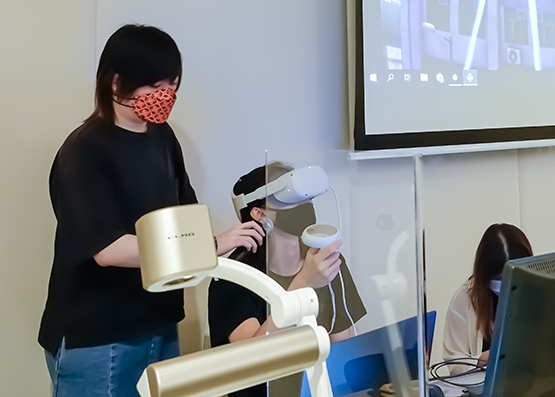
The project connects four institutions in Hong Kong to develop a video communication solution with a built-in simultaneous response system and assessment tools called Crio. The participating institutions will develop online and blended-learning courses with augmented reality (AR), virtual reality (VR), and gamified elements to provide students with a joyful learning experience through interaction.
Project Objectives
- Setting up a video communication solution that has a built-in simultaneous response system to engage students in online classes and also provides solution for online assessment;
- Develop a VR/AR courseware application that can generate and edit VR/AR contents for various teaching needs and purposes, as well as for a variety of applicable devices;
- Create 20 online and blended learning courses with game elements and VR/AR technology; and
- Organize hands-on workshops and seminars to acknowledge teaching staff on technical skills and the conceptual framework of online teaching pedagogy and gamification of course contents.
For more details of the project, please visit our project website
DOTLAS Sharing Platform
Overview
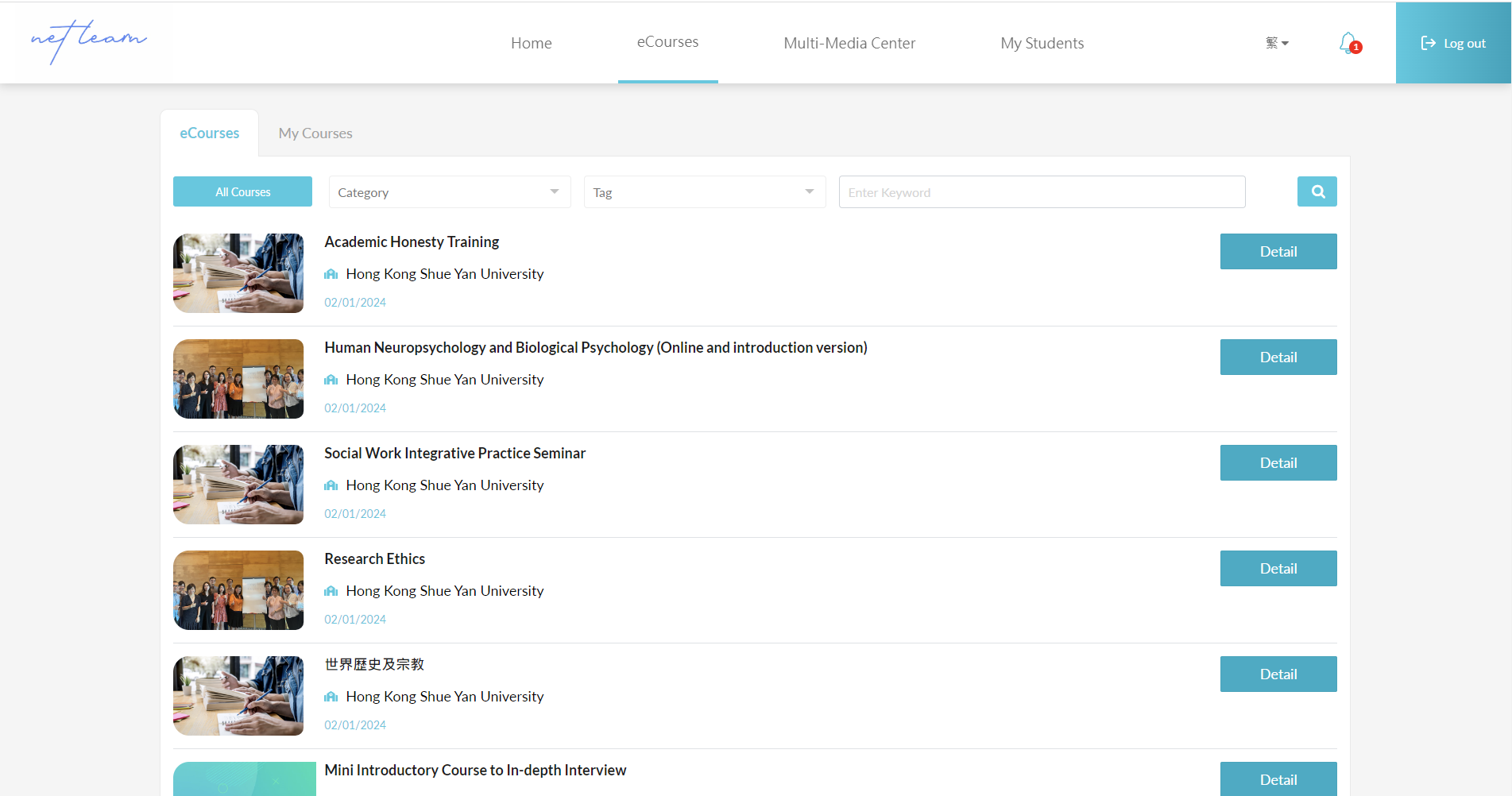
This sharing platform allows the general public access and utilization of the blended teaching and learning materials developed in the project. Types of courseware available on the sharing platform include educational animations, micro module videos, online games, other game materials, VR tours and VR programs. The new platform developed provides a more integrated and systematic organization and display of the courseware, and the progress tracking functions, and certification function support general users to self-learn with the materials
You can access the sharing platform here.
You can access the sharing platform here.
↑